Office Removals in Notting Hill
Local office moving support for businesses in Notting Hill

If you are planning Office Removals in Notting Hill, the process can feel more involved than a standard move. Offices in this part of West London often sit in converted townhouses, mixed-use buildings, managed workspaces, and upper-floor premises with narrow staircases or limited lift access. That means careful planning, reliable timing, and a moving team that understands the practical realities of the area.
Whether you are relocating a small studio, a growing agency, a professional practice, or a larger commercial workspace, the right moving service can make a major difference. A well-managed office move helps reduce downtime, keeps equipment protected, and makes it easier for your team to get back to work quickly. In a busy district such as Notting Hill, where parking can be tight and access routes can be restricted at certain times, local experience is especially valuable.
Our office removals service is designed for real businesses that need a smooth, organised, and flexible move. We help with everything from pre-move planning and furniture handling to IT equipment transport and placement in the new premises. Contact us today if you need a dependable move arranged around your working hours, building access, and operational needs.
Why local knowledge matters in Notting Hill

Notting Hill has a distinctive mix of commercial spaces and residential streets, and that mix creates moving challenges that are easy to underestimate. Office buildings may be tucked into shared developments, period properties may have awkward entry points, and busy nearby roads can make loading and unloading more complicated than it first appears. A team familiar with the area can plan around these details more effectively.
Local knowledge matters for route planning as well. The right mover understands that journey times can vary depending on traffic patterns, market days, nearby roadworks, or restrictions around loading bays and access points. That can help you avoid unnecessary delays and keep your office relocation moving on schedule.
It also helps to work with a company that understands the needs of different local customers. Notting Hill is home to independent businesses, creative teams, consultancies, landlords, serviced offices, and professional service providers. Each one has different priorities, from moving confidential files safely to keeping a reception area, meeting room, or client-facing space functioning until the last practical moment.
What our office removal service can include
Every business move is different, so the service should be flexible enough to fit your setup. Office removals can include packing, dismantling, transport, unloading, and reassembly, along with careful handling of sensitive items and furniture. The aim is to make the move efficient while protecting your assets and reducing disruption.
Typical office moving support may include:
- Pre-move planning and scheduling
- Office furniture dismantling and reassembly
- Safe packing of documents, files, and equipment
- Transport of desks, chairs, cabinets, and shelving
- Handling of IT equipment and peripherals
- Movement of meeting room and reception items
- Loading, unloading, and placement at the new site
- Optional support for larger or heavier items
Some businesses only need help moving a few key items; others need a full-scale relocation of an entire floor or multiple departments. Either way, a structured approach helps keep the day manageable. If you need a tailored solution, request a free quote and outline the size of your office, the type of premises, and any special handling requirements.
How an office move usually works

A good office relocation should follow a clear process. That starts with understanding what needs to be moved, when access is available, and what the building conditions are like at both locations. For local customers arranging office removals in Notting Hill, the planning stage is especially important because older properties and busy streets can introduce practical constraints.
In most cases, the process looks something like this:
- Initial discussion of your move requirements and premises details
- Assessment of access, parking, lifting needs, and scheduling constraints
- Planning of packing, dismantling, and transport arrangements
- Preparation of the workspace and labelling of items where needed
- Moving day transport and placement at the destination
- Reassembly or reorganisation of furniture and equipment
- Final checks to make sure everything has arrived in the right place
For some customers, the move may happen outside core office hours, over a weekend, or in phases so that business operations can continue as smoothly as possible. That flexibility can be particularly helpful for firms that receive clients in person or need to maintain service levels during the transition.
Office types and premises we commonly help with
Notting Hill contains a wide range of office environments, and each one requires a slightly different approach. A move from a small design studio is not handled in the same way as a relocation from a shared workspace or a multi-room professional office. Understanding the type of premises helps ensure the correct vehicle size, manpower, equipment, and timing are arranged.
We regularly assist with moves from and to:
- Converted period properties used as offices
- Creative studios and media workspaces
- Consultancy and professional service offices
- Managed office suites and serviced workspaces
- Retail-adjacent commercial units
- Upper-floor offices in mixed-use buildings
- Small business premises with limited storage space
We also help businesses moving into nearby areas such as Kensington, Bayswater, Holland Park, Ladbroke Grove, Paddington, Shepherd’s Bush, and Maida Vale. That local reach is useful for companies that are staying within West London and need a move handled with minimal interruption.
Handling access, parking, and loading in Notting Hill
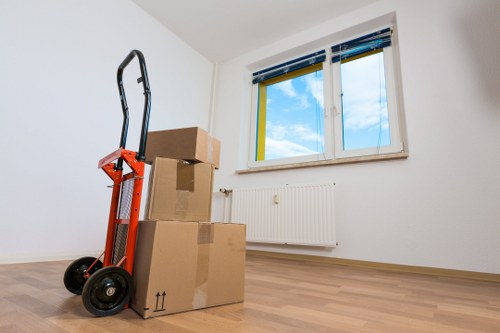
One of the biggest issues with moving office furniture in Notting Hill is access. Streets can be narrow, loading spaces may be limited, and larger vehicles may need a carefully timed arrival. For some buildings, there may be lift restrictions, shared entrances, or specific move-in rules set by the property manager or freeholder. These practical matters need to be addressed before moving day, not after the team has arrived.
A local office removals team can help plan around the realities of the area, including:
- Restricted curb space and short loading windows
- Residential neighbours and noise-sensitive timings
- Steps, narrow corridors, and stair-only access
- Multiple floors or awkward internal layouts
- Building rules for use of lifts or protected surfaces
- Busy roads and traffic timing considerations
It is also worth thinking about where furniture and equipment will be parked or held while loading and unloading takes place. If your office sits in a busy mixed-use street, a moving team can help you think through the sequence of the move so items are not left exposed or blocking access for too long.
What businesses want from office removals
Most business owners and office managers are not simply looking for transport. They want certainty, care, and minimal disruption. A successful office move should feel organised from the start and practical on the day. That means clear communication, attention to detail, and a service that is adapted to the way your business actually works.
Common priorities include:
- Keeping downtime as short as possible
- Protecting furniture, screens, computers, and paperwork
- Moving at a time that suits the business
- Working efficiently in tight or shared spaces
- Making sure essential items are easy to find at the new office
- Avoiding unnecessary stress for staff
If you are relocating a customer-facing business, you may also need the move to be discreet and orderly. If you are moving a back-office function, the focus may be on speed and accurate placement of workstations. Either way, the best approach is one that is built around your team’s needs.
Preparing for your office move
Preparation makes a big difference to how easy moving day feels. The more clearly items are sorted and labelled, the faster your office can be loaded and set up again. That is especially useful in Notting Hill, where access windows may be tight and time on site can be limited.
Here is a practical preparation checklist:
- Identify what is being moved and what is staying behind
- Back up important digital files before the move
- Label desks, storage units, and boxes by department or room
- Empty drawers and secure loose items
- Set aside confidential records for special handling
- Disconnect devices and note cable arrangements where needed
- Tell staff what they need to pack and when
- Confirm access arrangements at both addresses
It can also help to nominate one person in the office to oversee key decisions on the day. That way, if a question comes up about placement or sequencing, there is a clear point of contact. Book your service now if you want support planning the move from the outset rather than trying to manage everything at the last minute.
Packing, protection, and handling

Office furniture and equipment often need more protection than people expect. Desks may have fragile fittings, screens can be sensitive to impact, and filing cabinets or storage units can be heavy and awkward to move. Good handling practices matter, especially when moving through stairwells, lifts, or narrow communal areas.
Depending on your requirements, the move may involve protective wrapping, careful stacking, item labelling, and manual handling techniques suited to the size and shape of the load. Some customers prefer a full packing service, while others want help only with the largest or most difficult items. Both approaches can work well when planned properly.
If your office includes delicate items such as artwork, specialist devices, archive boxes, or presentation materials, mention these during the booking stage. That allows the move to be arranged with the right level of care and the right type of vehicle space. Protecting your assets is not just about avoiding damage; it also helps ensure the office is ready to function when you arrive.
Commercial and residential-style office moves
Notting Hill has many businesses operating from properties that feel more residential in layout than purpose-built office blocks. That can include home offices, private practices, small consultancies, and independent teams working from converted homes. These moves often require extra sensitivity because the building may still be occupied or shared with others.
For residential-style offices, the main concerns often include:
- Protecting floors, walls, and common areas
- Working quietly and efficiently in shared buildings
- Managing access through hallways or internal staircases
- Keeping the move respectful to neighbours and other occupants
- Careful handling of personal and business items together
Commercial office spaces may involve different challenges, such as larger furniture items, more equipment, or a need to co-ordinate with building management. A local team used to both types of environments can adjust its approach accordingly, which saves time and helps prevent avoidable complications.
Pricing factors for office removals
Costs can vary depending on the size and complexity of the move, so it is best to think in terms of the factors that influence the final quote rather than assuming one fixed price fits every office. A transparent quote should reflect the actual job requirements and avoid unnecessary extras.
Common pricing factors include:
- Volume of furniture and equipment being moved
- Number of movers required
- Distance between the old and new premises
- Access conditions at each property
- Need for dismantling or reassembly
- Timing of the move, including evening or weekend work
- Special handling for sensitive or bulky items
The best way to receive an accurate quote is to share as much detail as possible about the office layout, floor level, access points, and any items that need extra care. That helps avoid unexpected changes on moving day and allows the job to be scheduled properly from the beginning. If you are comparing options, ask what is included so you can judge value as well as price.
Why choose a local company for your move
There are real advantages to using a company that regularly works in and around Notting Hill. Local movers are more likely to understand the character of the area, the pace of traffic, and the practical difficulties of older buildings and busy streets. That kind of familiarity can make the entire move feel easier.
Choosing local office removals in Notting Hill can help because the team is more likely to:
- Plan routes efficiently through West London
- Anticipate access and parking limitations
- Respond more flexibly to timing changes
- Understand building layouts common in the area
- Work with nearby business premises and mixed-use properties
For businesses that need a move handled with less disruption and better practical judgement, local experience is often the deciding factor. It is not just about transport; it is about knowing how to move an office safely and sensibly in a real neighbourhood environment.
Areas covered around Notting Hill
Many customers moving in Notting Hill also need support with nearby locations, either because their current office is just outside the area or because the move is taking place between West London business districts. A local team can often help with short-distance relocations that still require careful scheduling and access planning.
Areas commonly covered include:
- Kensington
- Holland Park
- Bayswater
- Ladbroke Grove
- Maida Vale
- Paddington
- Shepherd’s Bush
- Westbourne Grove
- North Kensington
- Portobello Road area
If your business is moving between any of these nearby locations, it may be possible to arrange a straightforward office relocation with a timetable that suits your team. This is especially helpful for organisations staying within the same borough or local commercial area and wanting to minimise downtime.
Practical benefits of a well-planned office move
A well-planned move does more than shift furniture from one building to another. It helps preserve workflow, reduces stress, and gives your team confidence that the new office will be ready when they arrive. That matters for customer-facing businesses as well as internal teams that rely on a functioning workspace from day one.
The main benefits include:
- Less interruption to daily operations
- Safer handling of office items
- More predictable moving day timing
- Better organisation at the new location
- Reduced risk of items being misplaced
- Improved staff experience during the transition
For businesses in Notting Hill, these benefits are particularly useful because the local environment can make unplanned moving inefficient. When access is tight and the streets are busy, a structured move gives you a far better outcome than trying to manage everything ad hoc.
Frequently asked questions
Can office removals be arranged outside working hours?
Yes, many businesses prefer evenings, early mornings, or weekends so they can keep trading or serving clients during normal office hours. If timing is important, mention it early so the move can be planned accordingly.
Do you help with desks, chairs, cabinets, and meeting room furniture?
Yes, office removals typically include a wide range of furniture and fittings, from workstations and storage units to reception items and meeting room furniture. If anything is especially large, heavy, or fragile, it should be flagged in advance.
What if my office is on an upper floor or in a period building?
That is common in Notting Hill. A local moving team can plan for stair access, shared entrances, narrow corridors, and other building constraints. The key is to give accurate details before moving day.
Can you move sensitive files and equipment?
Yes, but it is important to mention confidential records, specialist devices, and delicate equipment when requesting a quote. That helps ensure they are packed and transported with the right level of care.
How far in advance should I arrange my office move?
The sooner, the better. This gives time to review access, schedule the move properly, and prepare staff. Even a relatively small office move can benefit from early planning, especially in a busy area like Notting Hill.
What should I do if I need a fast office relocation?
Contact the moving team as soon as possible with the basic details: current location, new location, approximate volume, access conditions, and preferred timing. A quick response is often possible when the move is straightforward and the plan is clear.
Ready to plan your move?
If you are organising Office Removals in Notting Hill, the best next step is to speak with a local team that understands the area and the realities of moving a working business. Whether you are relocating a small office, a creative workspace, or a larger commercial setup, a careful plan can save time and reduce stress.
Look for a service that offers practical support, clear communication, and flexibility around your building access and schedule. If you want to move with less disruption and more confidence, contact us today to discuss your requirements, request a free quote, and prepare your office move in a way that works for your business.
Local knowledge, careful handling, and thoughtful planning make all the difference when moving offices in Notting Hill.