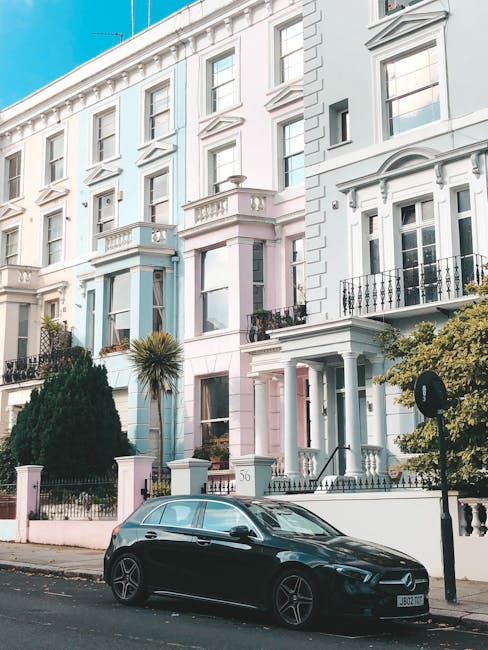
Parking Suspensions, Permits & Liability in Notting Hill
Parking in Notting Hill can look simple from the pavement and then turn messy very quickly once a van, a booked slot, a suspended bay, or a permit condition enters the picture. If you are moving home, delivering furniture, fitting out a flat, or arranging a same-day job, Parking Suspensions, Permits & Liability in Notting Hill is one of those topics that can save you time, money, and a lot of unnecessary stress.
Let's face it: a great move can be undone by one overlooked bay suspension notice or one badly timed arrival. This guide breaks down what parking suspensions and permits mean in practical terms, who is usually responsible for what, and how to reduce the risk of fines, complaints, damage, or wasted hours circling around W11. It is written for real-life situations, not theory.
If you want the broader local context as well, you may also find our guide to Kensington and Chelsea council permit rules for Notting Hill moves helpful alongside this article.
Table of Contents
- Why Parking Suspensions, Permits & Liability in Notting Hill Matters
- How Parking Suspensions, Permits & Liability in Notting Hill Works
- Key Benefits and Practical Advantages
- Who This Is For and When It Makes Sense
- Step-by-Step Guidance
- Expert Tips for Better Results
- Common Mistakes to Avoid
- Tools, Resources and Recommendations
- Law, Compliance, Standards, or Best Practice
- Options, Methods, or Comparison Table
- Case Study or Real-World Example
- Practical Checklist
- Conclusion
- Frequently Asked Questions
Why Parking Suspensions, Permits & Liability in Notting Hill Matters
Notting Hill is a lovely place to live, but it is not forgiving when it comes to vehicle access. Streets are often narrow, loading space is limited, and parking rules can change fast. One morning a bay may be fine; by lunchtime it may be suspended for works, removals, filming, or another local restriction. If a van arrives without checking the current situation, the knock-on effect is usually immediate.
That matters for three reasons. First, time: a team waiting while someone hunts for space is expensive and frustrating. Second, money: penalties or clamp-style enforcement can turn a straightforward booking into a costly mistake. Third, liability: if a driver parks in the wrong place, blocks access, or ignores a suspension notice, responsibility can become a messy question between the driver, the customer, and the party that arranged the move.
In practice, the biggest risk is not usually one dramatic incident. It is the accumulation of small oversights. A permit not arranged early enough. A misunderstanding about who applied for the bay. A last-minute change in arrival time. A front door that opens onto a very tight street at school-run hour. Notting Hill rewards planning. It does not reward hope.
For people browsing properties or planning a move into the area, this local reality sits right alongside broader decisions about finding properties in Notting Hill and whether the area really suits your lifestyle, commute, and budget. The parking question sounds narrow, but in real life it touches the whole move.
How Parking Suspensions, Permits & Liability in Notting Hill Works
At a practical level, the system usually has three moving parts:
- A parking suspension, where a bay or stretch of road is temporarily restricted for a specific reason.
- A permit or exemption, which may allow certain vehicles or activities to use a bay under defined conditions.
- Liability, which is the question of who carries the risk if something goes wrong.
A suspension is not just a sign on a post. It is an active restriction that needs to be checked against the day and time of the booking. Sometimes the detail matters more than people expect: the start and end times, the exact bay length, whether it applies to a single side of the street, and whether the vehicle size is suitable. If any of that is wrong, a good plan can fall apart quickly.
Permits work differently depending on the situation. For a residential move, a permit may be needed for the vehicle to stop legally or to reserve access. For a commercial delivery, the requirements can be different again. For a van dropping off fragile items, such as a piano, there may be added care over positioning and timing. If you are arranging something delicate, our piano removals in Notting Hill page is a useful companion because the parking setup and the handling plan really do need to match.
Liability is the part people often skim over. Who pays if a suspension was clearly marked but not checked? Who is responsible if the booking details were not passed on? Who answers if the vehicle damages kerbs, rails, paving, or a building entrance? Usually, the answer depends on the contract, the instructions given, and what a reasonable operator would have done in the circumstances. That is why it helps to keep messages, booking confirmations, and bay details together. Boring? A little. Useful? Absolutely.
And because Notting Hill includes everything from mansion blocks to compact flats and busy mixed-use roads, the same parking approach does not fit every job. A flat move near a tight mews road, for example, often needs a different plan from a house move with frontage space. If you are comparing move types, our flat removals in Notting Hill and house removals in Notting Hill pages show how those access issues can differ in real terms.
Key Benefits and Practical Advantages
Getting parking, permits, and liability sorted properly is not just about avoiding a ticket. It changes the whole tone of the job.
- Less delay: the vehicle can get into position faster, so loading starts on time.
- Lower risk of fines: a valid arrangement reduces avoidable enforcement problems.
- Cleaner handover: everyone knows who booked what, and what each side is responsible for.
- Better protection for property: a well-positioned van is less likely to cause stress, crowding, or rushed handling.
- Less friction with neighbours: no one enjoys a bay blocked by a van that should never have been there.
There is also a softer benefit that gets overlooked. Good parking planning calms the whole day down. You will notice this especially in the first ten minutes of a move. When the vehicle is where it should be, the team can work rather than improvise. Doors open. Boxes move. Someone stops asking, "Are we still okay here?" every two minutes. That sounds small, but it matters.
For property owners and landlords, the upside is even broader. A smooth parking setup helps protect fixtures, pavements, entrances, and tenant relationships. If you are looking at Notting Hill as an investment area, these operational details sit right alongside the broader property picture discussed in our Notting Hill real estate investment guide.
Who This Is For and When It Makes Sense
This topic matters if any of the following apply to you:
- You are moving home in W11 and need a van to load or unload near the property.
- You manage a rental, refurbishment, or furnishing project and need scheduled access.
- You are a business owner arranging deliveries, installations, or office relocation.
- You have bulky or valuable items that need careful handling and a sensible stopping point.
- You want to know who bears the risk if parking rules are breached.
It makes sense whenever the vehicle cannot simply pull up safely and legally without a bit of planning. In Notting Hill, that is most of the time. Even a seemingly simple job can become awkward if there is a suspension, a resident-only restriction, or a very tight access point near the property.
Students and short-term renters often miss this part. They focus on boxes, keys, and move dates, then discover the street outside is much less flexible than expected. If that sounds familiar, our student removals in Notting Hill service page covers the sort of practical access issues that come up again and again.
Office moves are similar but usually more time-sensitive. If a business has to keep trading or minimise downtime, even a half-hour parking delay can ripple through the rest of the day. In those cases, it is worth planning early and checking whether a larger vehicle, a staggered arrival, or temporary storage may be the smarter choice. A bit dull on paper; much better in real life.
Step-by-Step Guidance
Here is a straightforward way to handle parking suspensions, permits, and liability without overcomplicating it.
- Check the street conditions first. Look at the exact road, not just the postcode. Bays, loading spaces, and access widths can vary block by block.
- Confirm the move window. Make sure the expected arrival time matches any suspension or permit conditions.
- Identify who is applying or checking. Is it the tenant, landlord, property manager, removals company, or driver? Write it down.
- Share the property access details. Include floor number, entrance type, lift availability, nearby restrictions, and any known bottlenecks.
- Plan for the vehicle size. A van that is too large can be as much of a problem as one that is too small and makes extra trips.
- Keep records. Save messages, confirmations, and any parking notes in one place.
- Prepare a fallback option. If the bay is unavailable, where will the vehicle stop instead? A backup plan saves the day when the street is unexpectedly busy.
In our experience, the most reliable jobs are the ones where someone has already thought through the first three minutes of arrival. Not the whole day. Just the first three minutes. Where does the van stop? Who is greeting the driver? Which door is used? Those tiny decisions keep everything moving.
If a job involves last-minute changes, the planning has to be even tighter. Our same-day removals in Notting Hill page is worth a look if you are dealing with a tight turnaround and need the parking setup to be practical, not perfect.
Expert Tips for Better Results
Here are the habits that tend to separate smooth jobs from stressful ones.
- Use the exact street name in communication. Not "near Portobello" or "close to Westbourne." The precise road matters.
- Take photos of signs when appropriate. A quick image can help later if there is a dispute or confusion.
- Ask about loading access before the move day. A front bay and a loading bay are not interchangeable, and people sometimes assume they are.
- Build in a buffer. London traffic, school runs, and a blocked corner can all eat into your margin.
- Protect the handover point. Matting, floor protection, and a clear pathway reduce the chance of avoidable damage if the van is parked close to the entrance.
One thing we see quite a lot: people plan the route but forget the parking, or plan the parking but forget the route. Both matter. Especially in streets around Ladbroke Grove or Westbourne Park, where access can change very quickly depending on the time of day. If your move is in that part of town, our Ladbroke Grove parking and route tips and Westbourne Park access guidance may save you a headache or two.
Another good habit is to look beyond the move itself. If furniture has to wait, storage can buy breathing room and reduce pressure on parking windows. That is where storage in Notting Hill can be surprisingly useful.
Common Mistakes to Avoid
The same issues show up again and again. They are avoidable, but only if someone is paying attention.
- Assuming a bay is fine because it was fine last week. Suspensions change. Streets are not static.
- Leaving permit checks until the day of the move. That is when delays become expensive.
- Not clarifying liability in writing. If everyone thinks someone else is handling it, nobody is.
- Forgetting about the return journey. A loading space that works for arrival may not work for the outbound leg.
- Using the wrong vehicle size. Too big and you block; too small and you double the trip count.
- Ignoring neighbours or building staff. A quick heads-up often avoids complaints and awkward conversations.
There is a specific issue around suspended bays that catches people out in W11. The bay may look normal, but the suspension notice can make it off-limits for the exact period you need it. Our guide to suspended bay fines in W11 explains why that detail matters so much.
Also, if bulky items are part of the move, parking and waste planning often collide. You do not want a van loaded with furniture and then a separate disposal problem creating another round of fines. The article on disposing bulky waste in Notting Hill without fines connects neatly with this topic.
Tools, Resources and Recommendations
You do not need a big toolkit for this, but a few simple things help enormously.
- A written move plan with times, addresses, and access notes.
- Photographs of the street and bay signs, taken before the move if useful.
- A single contact person who can answer the driver quickly if plans change.
- Protective materials for floors, corners, and narrow hallways.
- A backup parking idea in case the first choice is unavailable.
From a service perspective, it also helps to know what kind of support you need. A basic van and driver setup is different from a full removals team. If you are comparing options, start with man and van in Notting Hill, then move up to full removal services in Notting Hill if the job is more complex.
For larger or more awkward properties, it can also be worth comparing vehicle choices and team size. The pages for removal van services and removal companies in Notting Hill can help you think through the scale of support you actually need, rather than the one you first imagine.
Law, Compliance, Standards, or Best Practice
When parking suspensions and permits are involved, the safest approach is to treat the published restriction as controlling unless you have clear confirmation otherwise. That sounds obvious, but in day-to-day work people often rely on memory, past experience, or informal assumptions. Those are exactly the things that get you into trouble.
Best practice usually includes the following:
- Check the exact terms of the suspension or permit before the vehicle is dispatched.
- Match the vehicle and timing to the restriction rather than hoping it will be "close enough."
- Document responsibility so there is no confusion later.
- Use reasonable care to avoid obstruction, damage, or unsafe loading.
In liability terms, written instructions matter. So does clear communication. If a customer gives incomplete information about a road restriction, that can affect the outcome. If a driver ignores an obvious warning, that is a different problem. If a permit was never arranged because nobody owned the task, well, that is the messy middle where disputes start. Not glamorous, but true.
If you want to understand how safety and cover fit into all this, our insurance and safety page is a sensible place to start. It sits well alongside the more practical operational detail here. For a broader service overview, services overview is useful too.
For people who prefer the legal and procedural side of a move to be clear from the outset, it is also worth looking at terms and conditions and pricing and quotes before confirming anything. That way you know where the responsibilities sit and what you are agreeing to.
Options, Methods, or Comparison Table
There is no single right answer for every move. The best approach depends on the property, the street, the time, and how much risk you are willing to carry.
| Approach | Best for | Advantages | Potential downside |
|---|---|---|---|
| Self-checking parking and permits | Simple moves with a confident local organiser | Cheap, direct, and flexible | Higher chance of missing a detail if you are busy or unfamiliar with the street |
| Driver-led parking planning | Van jobs where the driver knows local access patterns | Practical and fast on the day | Depends on the information provided being accurate and complete |
| Full removals planning | Larger home moves, awkward access, or valuable items | More structured, better coordination, less guesswork | Usually more expensive than a basic van booking |
| Staged move with storage | Moves with no easy parking or tight handover timing | Reduces pressure on the day and can simplify access | Needs more planning and may take longer overall |
If you are not sure which route fits, that is completely normal. People often think they need the simplest option when what they actually need is the least risky one. Those are not always the same thing. A short conversation can save a lot of back-and-forth later.
Case Study or Real-World Example
A realistic example helps here. Imagine a one-bedroom flat move near a busy Notting Hill street. The tenant has packed everything, the landlord has arranged access, and the van is due mid-morning. On paper, it looks easy. Then the driver arrives and finds a suspended bay closer to the entrance than expected. The remaining legal space is farther down the road and already occupied.
Without a backup plan, the team loses time while deciding where to stop. The tenant starts worrying. The building foyer becomes crowded. A neighbour wants to get out with a pram. Suddenly everyone is a little on edge. Nothing catastrophic, just noisy and annoying and avoidable.
Now compare that with a better-planned version. The organiser has already checked the road conditions, saved a photo of the bay sign, and agreed on a fallback loading point. The driver knows the exact timing window. The team reaches the property, parks where permitted, loads in a steady rhythm, and leaves without friction. The move still takes effort, of course. But it feels controlled. That is the real win.
This is why parking and liability planning is not a side issue. It is the part that keeps the rest of the job from wobbling.
Practical Checklist
Use this before moving day or delivery day. It is simple, but it covers the traps most people miss.
- Confirm the exact date and time of the booking.
- Check whether the road has a suspension, permit need, or loading restriction.
- Identify the best stopping point for the vehicle.
- Share access details with the driver or removals team.
- Confirm who is responsible for arranging parking or permissions.
- Keep a written record of confirmations and instructions.
- Prepare a backup parking option.
- Tell neighbours or building staff if the move may affect the entrance.
- Protect floors, walls, and thresholds near the loading route.
- Double-check the plan if the job shifts by even a small amount of time.
It sounds almost too basic, I know. But basic is good when the street is busy and the van is already running late.
Get a free quote today and see how much you can save.
Conclusion
Parking Suspensions, Permits & Liability in Notting Hill is not just a technical topic. It is part of the everyday reality of moving and delivering in one of London's trickiest neighbourhoods. The streets are beautiful, but they are tight, active, and not especially forgiving when plans are vague.
If you focus on the exact road, the correct timing, the right vehicle, and clear responsibility for the parking setup, you remove a huge amount of risk. That usually means fewer delays, fewer arguments, and a calmer day all round. And frankly, calmer is better. Always.
Whether you are moving a flat, shifting a piano, handling an office job, or just trying to avoid a parking headache, the principle stays the same: check early, communicate clearly, and keep a fallback ready. A little preparation here goes a long way. It really does.
Frequently Asked Questions
What does parking suspension mean in Notting Hill?
A parking suspension means a bay or section of road is temporarily restricted for a specific reason, such as works, access, or another authorised use. You should always check the exact times and location rather than assuming the space is available.
Who is usually responsible for getting a parking permit for a move?
That depends on the arrangement. Sometimes the customer or property manager handles it, sometimes the removals provider does, and sometimes the driver checks it on arrival. The important thing is that responsibility is clear before moving day.
Can a suspension notice override a normal parking permit?
In practical terms, yes, it often can. A permit does not automatically cancel a suspension, so the specific restriction on the day matters more than the general parking arrangement. Always check the exact terms.
Who is liable if a van gets fined in a suspended bay?
Liability depends on the circumstances, the instructions given, and the service agreement in place. If the wrong bay was used despite clear warnings, responsibility may sit differently than if the parking information provided was incomplete or incorrect.
How far in advance should I check parking for a move in Notting Hill?
As early as possible. For planned moves, checking several days ahead is sensible. For busier periods or more complex access, earlier is even better. Last-minute checks are risky because street conditions can change quickly.
What if I cannot park right outside the property?
That is common in Notting Hill. The solution is usually to plan a legal nearby stopping point, allow for a longer carry distance, or use a different vehicle or storage setup. It is better to adapt the plan than force the van into a bad space.
Are parking issues different for flats and houses?
Yes. Flats often involve tighter entrances, shared access, and more constraints around communal space. Houses may offer easier frontage in some cases, but not always. The exact street matters more than the property type alone.
Do I need to tell neighbours about a move?
You do not always need to, but it is often helpful. A quick heads-up can reduce frustration if a van is blocking part of the street briefly or if loading will be noisy. A little courtesy goes a long way.
What is the biggest mistake people make with parking suspensions?
Assuming yesterday's parking situation still applies today. Suspensions change, sometimes without much notice, and that is where many avoidable problems start.
How can I reduce liability during a move?
Keep instructions in writing, share precise access details, confirm the parking plan early, and make sure everyone knows their role. Good records and clear communication are the easiest way to reduce disputes.
Is it worth using storage if parking is difficult?
Often yes. If a move is awkward, storage can reduce pressure on the day and let you break the job into smaller, safer parts. That can be especially useful where access is tight or timing is uncertain.
Where can I find more help with Notting Hill moves?
Start with the service and local move guidance on this site, especially the pages on man and van in Notting Hill, removals in Notting Hill, and contact if you want to talk through a specific move. A short conversation often clears up the parking puzzle quickly.